Speaking
Speaking, podcasts, and comment
I am a psychologist at the University of Birmingham, where I lead the MA in Character Education at the Jubilee Centre for Character and Virtues. I speak to educators, clinicians, researchers, and general audiences about how people come to live well, and about what the evidence on that question can and cannot support.
My published work runs across wellbeing, cognition, and philosophy, and I enjoy contributing to contemporary arguments about people and about what they need in order to be at their best.
Talks
What I am usually asked to speak about
Each of these can run as a conference keynote, a public lecture, or a shorter conversational session. I adapt the level to the room rather than the label on the event.
-
Practical wisdom and flourishing
Practical wisdom is the oldest answer we have to the question of how to live well, and for most of its history it has been argued about rather than tested. I set out what phronesis actually is, what a decade of measurement work has and has not established about it, and why the link between being a good person and having a good life is looser, and a great deal more interesting, than either its defenders or its critics tend to assume.
-
Why not all values are equally valuable
This one tends to divide a room, which is rather the point. Therapy, coaching, and character education have converged on a comfortable premise: that values are personal, that the work is to clarify them, and that living by whatever you find there is what makes a life go well. I think that premise is mistaken, and that the mistake has consequences in the consulting room. Living by your values produces a better life only if the values themselves are any good. I set out how values can be assessed rather than merely elicited, what follows for acceptance and commitment therapy and its relatives as theories, and what changes in practice once you take it seriously.
-
Evidence-based practice in character education
Schools and funders are asked to invest in character education on the strength of an evidence base that is thinner, and more awkward, than it first appears. I go through what the available instruments can genuinely bear, where single-case and idionomic designs answer questions that group averages cannot, and how a school can find out whether its programme worked without deceiving itself.
-
The individual and the evidence base
Evidence-based practice rests on research about groups, and almost every decision a practitioner makes concerns one person. Those two facts sit together far less comfortably than the phrase suggests. An intervention that works on average still fails a substantial minority, and nothing in an average tells you which of the two any particular person is in. This talk is about what that problem actually is, why clinical judgement and context are not the enemies of evidence, and what a practice that took both seriously would look like.
-
After intelligence: what remains distinctively human
For most of the modern period, reasoning power was taken to be the thing that set human beings apart. That assumption is now under real pressure. I look at what is left once it goes, why practical wisdom is a better candidate than intelligence ever was, and what follows for how we educate people.
Formats
Ways I can contribute
Keynotes
Conferences and professional meetings, forty-five to sixty minutes with questions.
Public talks
Festivals, universities, schools, and societies, for audiences without specialist background.
Podcasts
Long-form conversation, which is where I am at my most useful. I prefer to be pushed on the argument rather than asked to summarise it.
Panels and debates
Including positions I am expected to disagree with. Disagreement is the point of a panel.
Media interviews
Print, radio, and broadcast. I do media work regularly, though I prefer lectures and long-form podcasts, where there is room to qualify an argument properly rather than reduce it to a line. A recent example in El País.
Consulting and measurement advice
Instrument design, evaluation strategy, and review of existing measures, for ministries, funders, schools, and research teams.
Comment
On matters beyond my own field
Journalists and producers often want someone who can speak to a story rather than to a literature. I am glad to be that person.
My training is in psychological method and measurement, and I have worked closely enough with philosophers, educationalists, behaviour analysts, and clinicians to argue with each of them on their own terms. That combination is useful when a public argument turns on what a study actually showed, on whether a widely repeated claim has survived replication, or on the difference between a moral question and an empirical one that has been dressed up as moral. I have views on education policy, artificial intelligence, wellbeing and mental health, assessment and testing, the state of the social sciences and of the university more broadly, and on the older questions about human flourishing that religion, politics, and economics each answer in their own way.
Recent
Where I have been speaking
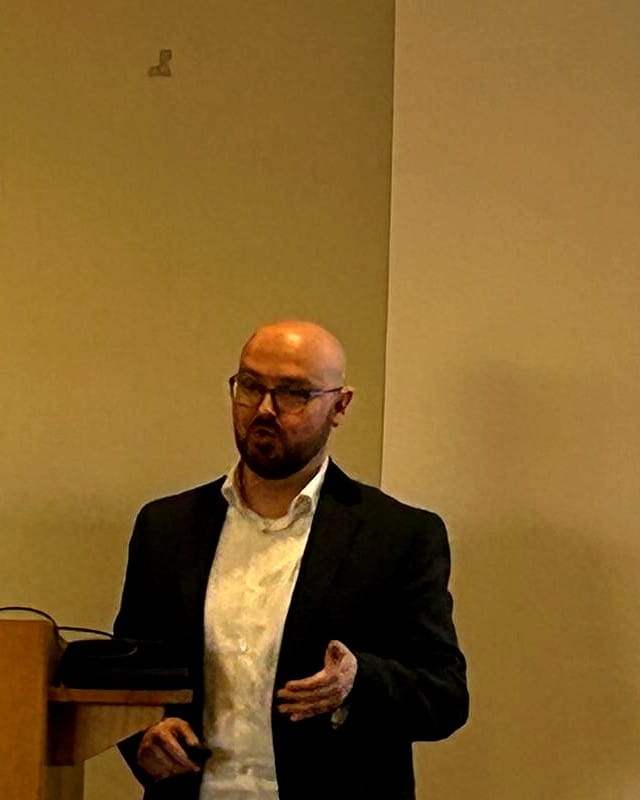
Conferences and lectures
- B. F. Skinner Lecturer, Conceptual and Historical Issues track, Association for Behavior Analysis International, San Francisco
- Association for Moral Education congress, Madrid
- Society for Educational Studies, Oriel College, University of Oxford
- Keynote, first Practical Wisdom Network conference, St Catherine's College, University of Oxford
- Festival of Education, Wellington College
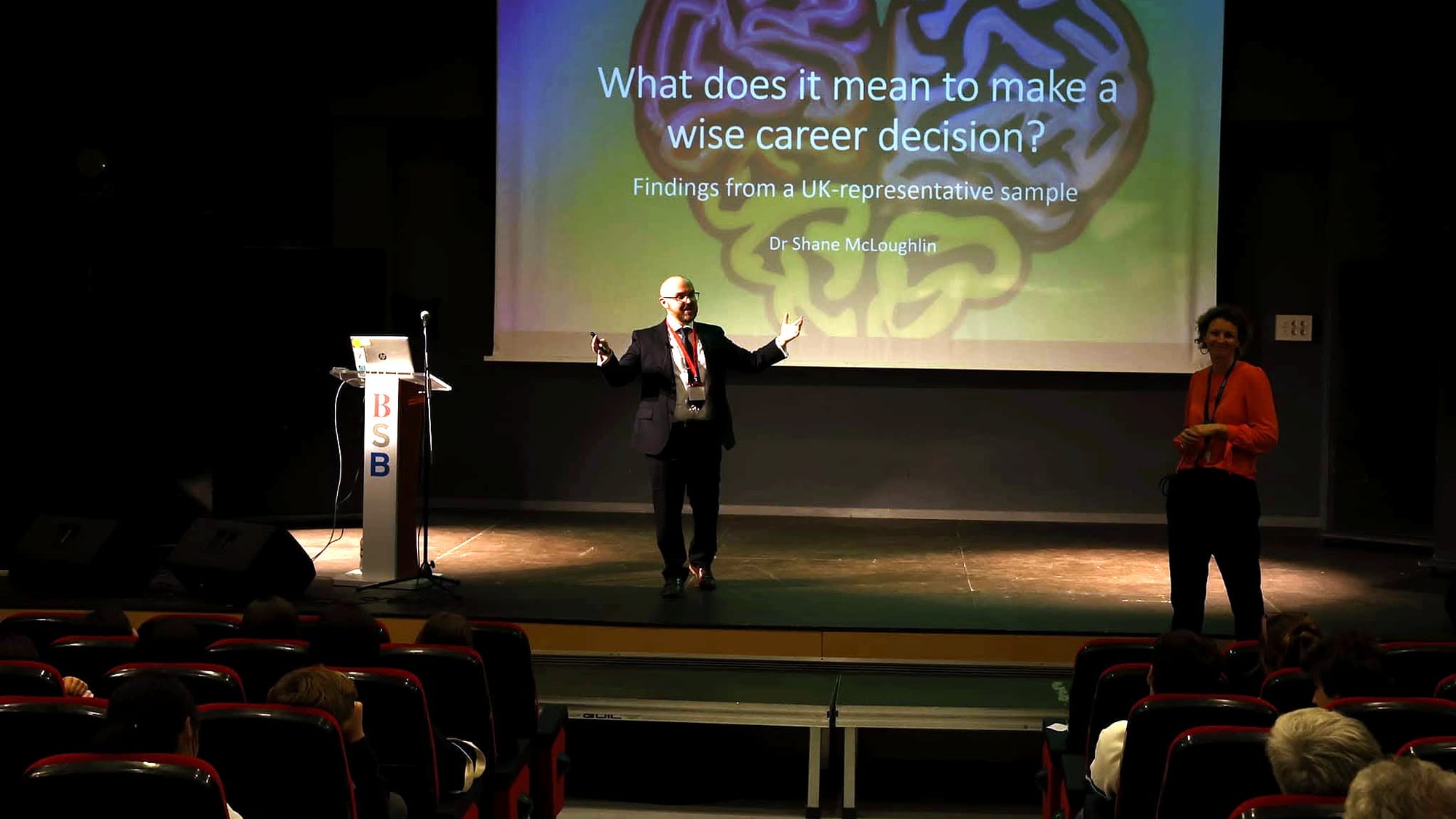
- British School of Barcelona
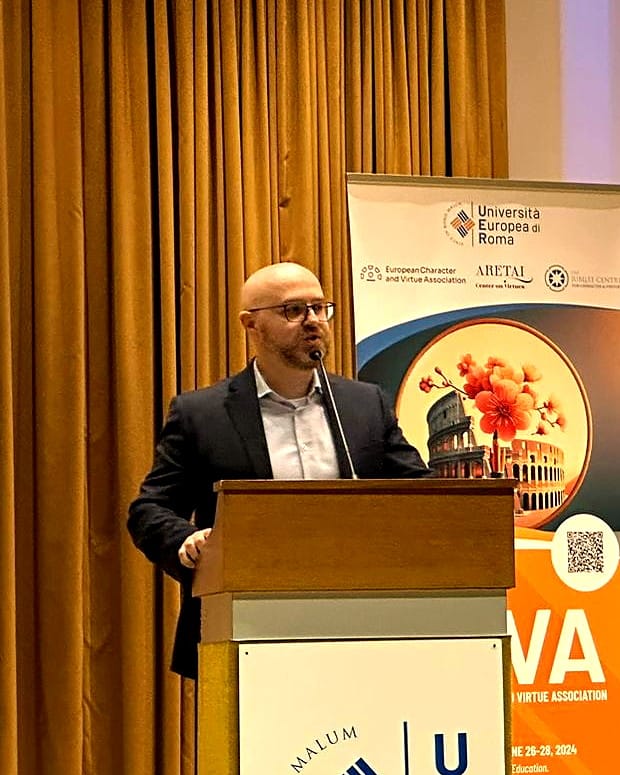
- European Character and Virtue Association, Universita Europea di Roma
Media and podcasts
- El País, on whether being good is good for you
- Practical Wisdom for Leaders, on how practical wisdom is caught, taught, and sought
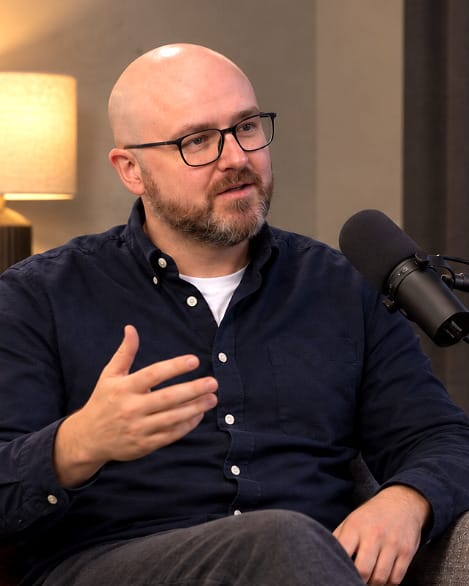
- The Philosophy and Therapy Podcast, episode 24
Media kit
Everything an organiser or producer usually needs
Copy any of this directly. If you need something cut to a particular word count, ask and I will write it rather than leave you to trim.
Shane McLoughlin is a psychologist at the University of Birmingham, where he leads the MA in Character Education.
Dr Shane McLoughlin is a psychologist at the University of Birmingham's Jubilee Centre for Character and Virtues, where he leads the MA in Character Education. He works on how people come to live well, and on the measures and study designs needed to find out whether they have.
Dr Shane McLoughlin is a psychologist at the University of Birmingham, where he is Programme Lead for the MA in Character Education at the Jubilee Centre for Character and Virtues.
His research has made original contributions in moral psychology, intelligence, behaviour therapy, education, technology, and psychological measurement, including in Q1 peer reviewed journals like the Journal of Moral Education, Intelligence, Behavior Therapy, the British Journal of Psychology, Current Opinion in Psychology, the British Educational Research Journal, and Educational Review. He has published on practical wisdom and its measurement, character education, on relational learning and intelligence test performance, and on AI and educational technology.
He lectures and speaks widely, including as a B. F. Skinner Lecturer at the Association for Behavior Analysis International, and writes Notions on Substack.

Details
For radio and podcast producers
Enquiries
Getting in touch
Two routes, depending on what you need. Tell me the audience, the date, and roughly how long you want, and I will tell you quickly whether I am the right person.
Talks, podcasts, panels, and press
Keynotes, public lectures, interviews, and anything else. Write to me directly.
Email meAcademic and research consulting
Instrument design, evaluation strategy, and measurement advice are arranged through characterED.
Contact characterEDOn fees: I often speak without one, for state schools, charities, and public interest events, asking only that costs are covered. I charge for commercial engagements, independent schools, and other organisations that budget for this sort of thing. If you are somewhere between the two, say so and we will find something sensible. Journalists working to a deadline should say so in the subject line, and I will treat it accordingly.